
Why a Local Service Business Should Take the Deposit Before the Visit?
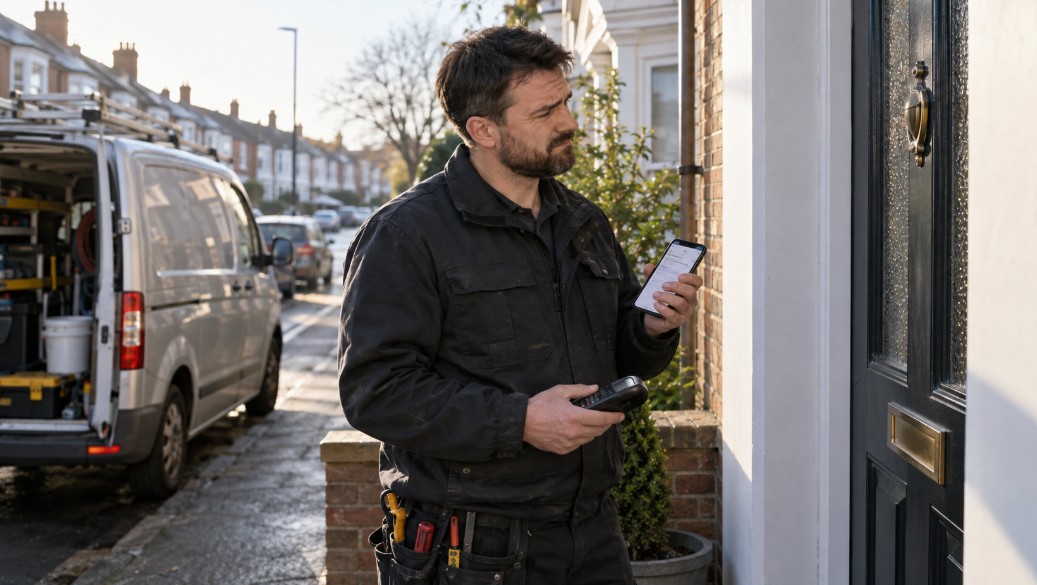
A plumber blocks out a 9 a.m. slot, drives twenty minutes across town, and knocks on a door nobody opens. The job disappears, the fuel is spent, and the slot that could have gone to a paying customer is gone too.
Multiply that by three or four times a week and a small operation is quietly bleeding hours it can never bill for.
Locksmiths, mobile mechanics, cleaners and appliance technicians all share the same exposure: the work happens off-site, so there is no counter to walk away from and no easy way to chase the no-show afterwards.
Some now route card authorisation through payment infrastructure such as Finteq Hub, which lets a business hold a small sum the moment a booking is confirmed rather than waiting until the technician is already on the doorstep.
The Real Cost of a No-Show
A missed visit rarely costs just the wasted hour. Fuel, tool wear, the opportunity to fill that slot with someone else, and the admin time spent rescheduling all stack on top of each other.

A UK callout survey from 2023 put the average wasted trade visit at roughly £45 once travel and rebooking are counted, and for a one-person operation that figure eats a meaningful slice of the day’s margin.
- Travel and fuel spent reaching an empty address
- A booking slot that could have gone to a paying customer
- Staff time lost rearranging the diary around the gap
- Tools or parts bought specifically for a job that never happened
Charging even a modest deposit changes the arithmetic. A customer who has already parted with £10 or £15 has skin in the game, and cancellation rates on pre-paid bookings in trade services routinely run well below those on free ones.
The deposit does not need to cover the whole job; it only needs to make walking away cost something.
| Deposit model | Typical amount | Best suited to |
| Flat booking fee | £5-£20 | First-time or online-only bookings |
| Percentage hold | 10-25% of quote | Larger jobs, kitchen or bathroom fit-outs |
| Card pre-authorisation | Full estimate, not charged | Emergency callouts, high no-show risk |
Fixed Deposits vs Percentage Holds
A flat fee is easiest to explain to a customer and easiest to process on a booking form, which is why cleaners and locksmiths tend to favour it. It sets a clear floor: even if the whole appointment collapses, the trip is not a total loss.
Percentage holds suit bigger jobs where the quote itself varies a lot. A boiler swap quoted at £900 justifies a £150 hold in a way a flat £10 fee never could, and the percentage scales naturally with the size of the work rather than needing a separate fee table for every job type.
Automating the Collection
Manually chasing a bank transfer before every visit is its own drain on time, which is why most trades now build the deposit into the online booking step itself. The customer enters card details once, and the appointment only locks into the calendar once that step clears.
Once it is configured, the same sequence replaces work that used to sit on a receptionist’s desk – picking up the phone, noting a card number, and chasing it up later:
- Putting a hold on the card, or taking the fee outright, the instant the slot lands in the calendar
- Sending an automatic reminder that repeats the cancellation terms
- Marking the job done and settling that held amount against the invoice
This also removes the awkward conversation on the doorstep. Nobody wants to ask for money before picking up a tool, and settling it beforehand keeps the visit itself focused on the job rather than the payment.
What Changes When a Deposit Is Required?
The diary gets more honest almost immediately. Customers who were never serious about the booking tend to drop out at the payment step rather than on the day, which means the technician only drives to addresses where someone is actually waiting.
Fewer wasted trips also means tighter, more realistic scheduling across the week.
There is a knock-on effect on pricing too. A business that stops absorbing the cost of no-shows does not need to pad every quote to cover the ones that fall through, so paying customers end up facing more transparent, less inflated prices.
Reliability becomes a two-way arrangement rather than something only the trade is expected to guarantee.
Setting a Policy Customers Accept
Clarity matters more than the exact amount. A short line on the booking page, “a £15 deposit secures your slot and is deducted from the final bill” – answers the obvious objection before it is even raised, and framing the deposit as part of the final price rather than an extra charge makes it far easier to accept.
Refund terms need the same clarity: state plainly whether a deposit is lost on a late cancellation or rolled over to a rebooked slot.
Trades that publish this once, on the booking form itself, spend far less time explaining it over the phone – and the visits that do happen are the ones that were always going to pay.
Author Profile

- Blogger by Passion | Contributor to many Business Blogs in the United Kingdom | Fascinated to Write Blogs in Business & Startup Niches |
Latest entries
 BusinessSeptember 23, 2026Why a Local Service Business Should Take the Deposit Before the Visit?
 BusinessSeptember 21, 2026How Niche Brands Earn Coverage Through Outreach?
 BusinessSeptember 2, 2026Top 12 AI Consulting Companies for Startups and Mid-Market Businesses in 2026
 SEOJune 26, 2026How Gaming Brands Build Trust With Content?