
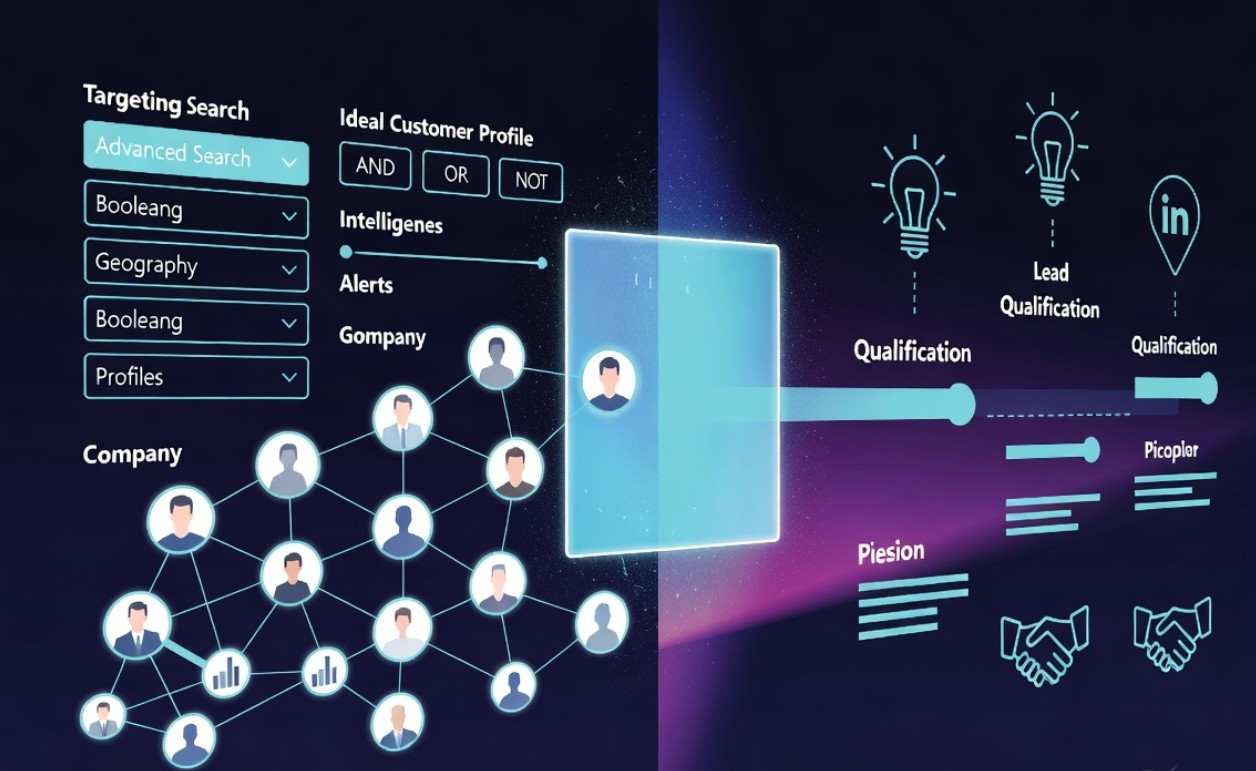
Mastering LinkedIn Sales Navigator: Advanced Prospecting Techniques
In today’s competitive business landscape, connecting with the right prospects at precisely the right moment can define the trajectory of your sales success.
Navigating the complexities of modern B2B prospecting requires more than just intuition; it demands sophisticated tools and strategies that transform raw data into meaningful relationships.
With the rise of social selling and digital engagement, sales professionals now have access to unprecedented intelligence about their target markets, enabling them to craft approaches that resonate on a genuinely personal level.
Advanced Prospecting Techniques For LinkedIn Sales Navigator
Leveraging Advanced Search Filters for Precision Targeting
The foundation of effective prospecting lies in identifying prospects who not only fit your product or service but who are also actively engaged and positioned to make purchasing decisions.
LinkedIn Sales Navigator offers a sophisticated suite of advanced search filters that allow you to move beyond the limitations of standard LinkedIn search capabilities.
By utilising filters such as job title, location, languages, industries, experience, company size, and keywords, you can dramatically refine your prospect pool.
Research indicates that optimised use of these advanced searches can reduce unqualified prospects by up to eighty percent whilst simultaneously increasing prospect qualification by three hundred percent, demonstrating the transformative power of precision targeting.
One of the most strategic approaches involves targeting decision-makers with active profiles, particularly those who have published content or engaged on the platform within the last thirty days.
This activity signals not only that they are present on LinkedIn but also that they are more likely to notice and respond to thoughtful outreach.
Understanding how to use LinkedIn Sales Navigator effectively means considering factors such as seniority within the company and company size as filtering criteria, which help ensure your efforts focus on individuals with genuine purchasing authority.
Moreover, tracking keywords in published posts allows you to identify prospects discussing topics relevant to your offering, creating natural conversation starters that feel less like cold outreach and more like timely engagement.
Defining Your Ideal Customer Profile With Boolean Search
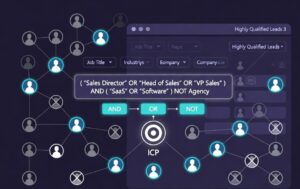
Boolean search functionality within Sales Navigator provides an exceptional layer of sophistication, enabling you to combine multiple search terms and operators to craft highly specific queries.
By using operators such as AND, OR, and NOT alongside quotation marks for exact phrases, you can construct searches that reflect the nuances of your ideal customer profile.
For instance, searching for consultant NOT agency excludes agencies from your results, whilst adviser OR consultant broadens your reach to capture both titles.
When combined with demographic and firmographic filters, Boolean search transforms prospecting from a scattergun approach into a laser-focused exercise that consistently surfaces high-quality leads.
The strategic combination of Boolean logic with filters like location, industry, and company size allows sales professionals to navigate vast databases of potential prospects and isolate those who precisely match their target criteria.
This precision is particularly valuable when operating within competitive markets where time spent on unqualified leads translates directly into lost opportunities.
Sales Navigator users who master these search techniques report that their prospecting targets become significantly more achievable, with seventy-three percent of B2B sales teams using the platform strategically exceeding their prospecting goals.
Utilising Company and Geography Filters for Maximum Relevance
Beyond individual prospect attributes, Sales Navigator’s company and geography filters enable a broader strategic view of your target market.
Searching posts and company pages helps identify trending discussions and reveals key decision-makers participating in those conversations.
This capability is invaluable for understanding not only who to contact but also the context in which they operate, the challenges they face, and the language they use to describe their needs.
By filtering prospects based on their company’s industry, size, and geographic location, you ensure that your outreach aligns with regional market dynamics and sector-specific pain points.
Industry benchmarks reveal the impact of this targeted approach. Acceptance rates vary notably across sectors, with consulting achieving fifty percent acceptance and twenty-two percent response rates, whilst financial services typically sees thirty-five percent acceptance and twelve percent response.
Tech and SaaS companies often experience forty-five percent acceptance and eighteen percent response, whilst manufacturing sits at forty percent acceptance and fifteen percent response.
These figures underscore the importance of tailoring both your search criteria and subsequent engagement strategies to the unique characteristics of each industry.
Organising and Monitoring Your Sales Pipeline Effectively
Once you have identified promising prospects through advanced search, the next critical step involves organising and continuously monitoring these leads to maintain momentum and capitalise on emerging opportunities.
Sales Navigator provides robust tools for managing your pipeline, ensuring that no potential relationship falls through the cracks due to oversight or timing issues.
Effective pipeline management transforms prospecting from a one-time activity into an ongoing strategic process that nurtures relationships from initial contact through to conversion and beyond.
Creating Strategic Lead and Account Lists for Better Workflow
Establishing strategic lead and account lists within Sales Navigator allows you to segment your prospects according to criteria that matter most to your sales process.
Whether you categorise by industry, deal stage, geographic region, or engagement level, these lists serve as dynamic repositories that evolve alongside your relationships.
By saving searches and organising prospects into themed lists, you create a structured workflow that makes it easier to prioritise outreach, track progress, and identify patterns in prospect behaviour.
This organisation is particularly valuable when coordinating team efforts or managing multiple campaigns simultaneously.
Using LinkedIn tags to categorise prospects adds another dimension to your organisational strategy, enabling quick identification of prospect characteristics or interaction history at a glance.
This granular level of organisation supports personalised outreach at scale, as you can easily recall context and previous touchpoints when crafting messages.
The combination of saved searches, custom lists, and tagging creates a comprehensive system that keeps your prospecting efforts focused and efficient, ultimately contributing to higher conversion rates and more predictable pipeline growth.
Setting Up Alerts to Stay Informed About Prospect Activities

Timing often proves as critical as messaging in successful prospecting. Sales Navigator’s custom alerts functionality ensures you remain informed about prospect activities that signal readiness to engage, such as job changes, company announcements, content shares, or participation in discussions.
These alerts provide natural opportunities to reach out with congratulations, insights, or relevant resources, positioning your outreach as timely and contextually appropriate rather than random or intrusive.
Research suggests that maximum receptivity windows for outreach occur on Mondays between eight and ten in the morning, Tuesday through Thursday between two and four in the afternoon, and Fridays between four and six in the evening, making timing a strategic consideration in your engagement plan.
Setting up alerts on saved leads and accounts transforms Sales Navigator from a static database into an active intelligence system that continuously monitors your prospect universe for engagement opportunities.
This proactive approach ensures you can respond swiftly to buyer signals, maintaining relevance and demonstrating attentiveness that builds trust and credibility.
When prospects see that you are aware of their achievements, challenges, or company developments, it reinforces the perception that your outreach is thoughtful and personalised rather than generic and automated.
Crafting Meaningful Engagement That Converts Prospects
Precision targeting and meticulous organisation lay the groundwork for prospecting success, but ultimately it is the quality of your engagement that determines whether prospects convert into meaningful business relationships.
Modern buyers expect personalised, value-driven interactions that acknowledge their specific context and needs.
Sales Navigator provides the intelligence necessary to craft such engagement, whilst complementary tools can enhance your ability to execute consistently and at scale.
Developing a Content Sharing Strategy That Resonates
Sharing relevant content represents one of the most effective ways to establish credibility and stay top-of-mind with prospects without resorting to direct sales pitches.
By curating and sharing articles, insights, case studies, and thought leadership pieces that address the challenges and interests of your target audience, you position yourself as a valuable resource rather than simply another vendor seeking attention.
This approach builds brand trust and credibility over time, creating a foundation for more direct conversations when prospects are ready to engage.
The key to an effective content sharing strategy lies in relevance and consistency. Sales Navigator’s insights into prospect activities, interests, and engagement patterns enable you to tailor your content selections to resonate with specific individuals or segments.
When prospects regularly see you sharing content that speaks directly to their professional challenges or industry developments, they begin to perceive you as someone who understands their world, making them more receptive when you do reach out with a direct message or invitation to connect.
Personalising Outreach Messages Using Prospect Intelligence
Whilst content sharing builds familiarity, personalised outreach messages catalyse direct engagement.
The prospect intelligence available through Sales Navigator, including profile details, recent activities, shared connections, and company news, provides ample material for crafting messages that feel genuinely personal rather than templated.

Referencing a recent post they published, congratulating them on a company milestone, or acknowledging a mutual connection immediately differentiates your message from the dozens of generic InMails and connection requests prospects receive daily.
A strategic five-step outreach sequence typically yields optimal results, with each touchpoint building upon the previous interaction whilst respecting the prospect’s time and attention.
Acceptance rate benchmarks suggest aiming for above forty percent, with response rates targeting above fifteen percent and meeting conversion goals of at least eight percent.
Optimised LinkedIn profiles, which generate forty percent more views, significantly enhance these metrics by establishing credibility before prospects even read your message.
When combined with automation tools that ensure consistent follow-up without manual effort, this personalised approach scales effectively across large prospect pools.
Sales Navigator is available through various pricing tiers, with the Core plan for professionals at approximately one hundred pounds per month, the Advanced Team plan at around one hundred fifty pounds, and the Enterprise Advanced Plus option at roughly sixteen hundred pounds per user annually on a quote basis.
For those seeking cost efficiencies, licence brokers sometimes offer Sales Navigator licences at reduced rates.
Complementary prospecting tools can enhance Sales Navigator’s capabilities, particularly in automating outreach campaigns on LinkedIn and via cold email whilst maintaining safety and compliance.
These tools often feature Google Chrome extensions that integrate seamlessly with your browser, enabling automated data scraping compatible with Sales Navigator and facilitating the execution of sophisticated, multi-touch campaigns without requiring constant manual intervention.
The combination of Sales Navigator’s targeting precision with automation’s consistency and scale creates a prospecting system that delivers predictable results.
Sales Navigator identifies who to target, whilst automation determines when and how consistently to follow up, ensuring that no prospect is neglected due to time constraints or oversight.
This synergy between intelligence and execution represents the future of B2B prospecting, where technology amplifies human insight rather than replacing it.
Mastering LinkedIn Sales Navigator requires more than simply understanding its features; it demands a strategic approach that integrates advanced search techniques, meticulous pipeline management, and thoughtful engagement into a cohesive prospecting system.
By defining your ideal customer profile with precision, organising your prospects systematically, setting up alerts to capture timely opportunities, and crafting personalised outreach that resonates, you transform prospecting from a numbers game into a relationship-building exercise.
The data confirms that sales teams employing these strategies consistently outperform their targets, demonstrating that when technology meets strategy and execution, exceptional results become not just possible but predictable.
Author Profile

- Blogger by Passion | Contributor to many Business Blogs in the United Kingdom | Fascinated to Write Blogs in Business & Startup Niches |
Latest entries
 BusinessSeptember 2, 2026Top 12 AI Consulting Companies for Startups and Mid-Market Businesses in 2026
 SEOJune 26, 2026How Gaming Brands Build Trust With Content?
 BusinessJune 17, 2026Best Coworking Offices in Central London for Remote Workers
 BusinessJune 4, 2026Scotland’s SaaS Sector Has a Selling Problem