
Maximising High-Impact Signage for UK Events in 2026

By Ryan Bradman
Visitors walking through a trade show rarely stop to decipher a crowded stand. They notice a clear message, recognise a familiar name or follow a sign that helps them find what they need.
Digital campaigns may bring people to an event, but physical signage shapes what they see when they arrive. For UK small businesses planning events in 2026, the strongest approach is to make those moments work together.
The Role of Print in 2026 Multi-Channel Marketing
Large format printing is most useful when it has a defined job within a wider campaign. An email invitation might introduce a new product, a social post might show where to find the exhibitor, and a stand graphic can repeat the same core message at the venue.
Visitors who have already seen the campaign then have a better chance of recognising the stand. Those encountering the business for the first time can still understand its offer without searching for a website.
Start by deciding what a passer-by should learn from several metres away. Usually, that means a business name, a short statement of what it offers and one compelling reason to approach.
A detailed product description belongs on material that visitors can read after they stop. Trying to give both jobs to one banner often produces small type and a message that is difficult to scan. At a busy exhibition, clarity matters more than filling every available centimetre.
Consistency does not require identical artwork across every channel. A square social graphic and a wide backdrop need different layouts, but their colours, product imagery and principal message should feel connected.
The same thinking applies after the event: if signage invites visitors to view a product range or book a conversation, the destination should continue that conversation. This makes marketing signage a practical part of the visitor journey rather than decoration added just before the doors open.
Essential Event Signage for Modern Trade Shows
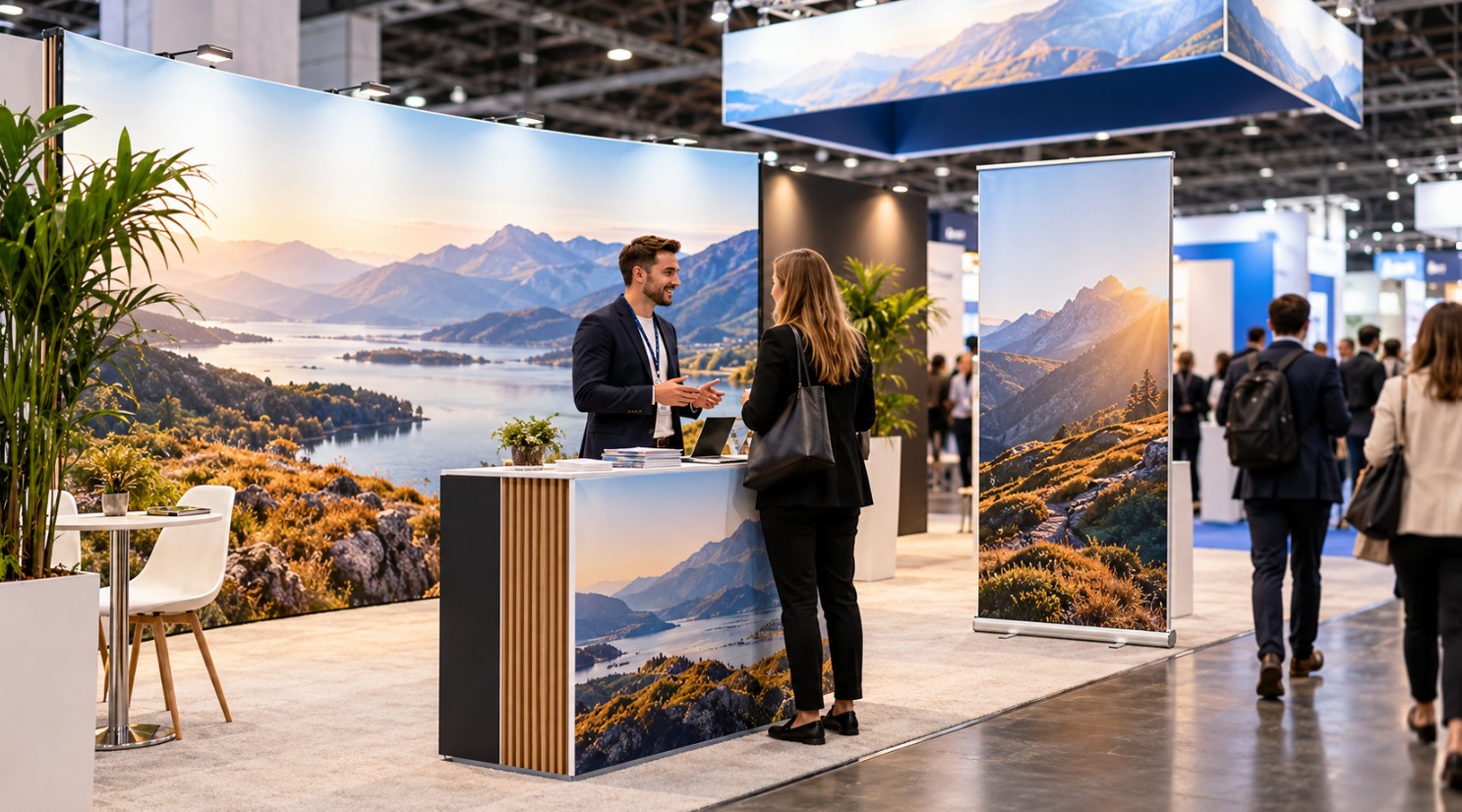
A stand needs to work from more than one viewing position. The backdrop provides the main visual identity for people approaching along an aisle. A roller banner can carry a shorter product explanation near the point where conversations begin.
A banner along the stand edge may help define the space or direct attention to a demonstration. For businesses sourcing these elements, Printing Central UK custom banners offer a way to size graphics around a specific display rather than forcing the stand plan around a standard message.
Before choosing products, sketch the route a visitor is likely to take.
Where will someone first see the stand? Could another exhibitor block the backdrop? Is there room to read a roller banner without obstructing the aisle? A sign at the rear may need a much shorter headline than a panel beside a demonstration table.
If several team members will be speaking with visitors at once, leave enough clear space for those conversations instead of surrounding every surface with text.
Portability matters for UK exhibition displays that move between venues. A roller banner can be transported and positioned without redesigning the whole stand, while a backdrop gives a larger area for a consistent brand presentation.
Vinyl banners 2026 event teams select can serve more flexible locations, provided their size, finish and fixings suit the intended position. Check the organiser’s stand specifications before ordering: permitted dimensions and mounting methods can affect whether a graphic works in the space booked.
The best test is to reduce the proposed stand design to three questions: who is this business, what does it do and what should an interested visitor do next?
If the answers depend on reading a paragraph from across the hall, simplify the artwork. Supporting details can still appear on nearer displays or printed handouts, where people have time to consider them.

Material Innovations in Large Format Displays
Material choice becomes especially important when an event includes outdoor entrances, fences or temporary structures. A solid vinyl banner provides a continuous printed surface.
It is a practical option where a full graphic is the priority and the mounting position is suitable. Mesh has a different construction: its perforated, breathable surface allows some air to pass through. Mesh banners can be used for applications such as fencing and scaffolding, including more wind-exposed positions.
That distinction helps with planning for the British climate, but it is not a blanket weather guarantee. A banner on an exposed fence faces different conditions from one fixed against a sheltered wall, even when both are outdoors.
Mesh can be the more appropriate format where airflow matters; solid vinyl may suit a sheltered display where an uninterrupted image is more important. Neither choice removes the need to consider the strength of the structure, the fixing points and conditions at the venue.
Viewing distance should also guide the artwork. Perforations can affect how fine detail appears on mesh, so bold lettering and simple shapes make more sense than dense copy.
Solid vinyl gives designers an uninterrupted area, yet that extra detail is valuable only if visitors can read it from where they will stand. A large graphic is not automatically an effective graphic.
Ask whether the headline remains clear at its actual installation height and whether essential information will sit behind furniture, railings or other displays.
For repeat events, separate reusable information from campaign-specific messaging. A general brand backdrop may remain useful across several exhibitions, while a banner promoting a seasonal offer can be changed as the campaign changes.
This keeps large format displays adaptable without requiring every element of a stand to carry a date or temporary promotion.
Streamlining the Procurement Process for Quick Turnarounds
Seasonal promotions rarely arrive in isolation. An event booking, a product launch and a retail campaign may all compete for the same small team’s time.
Quick turnaround helps a business respond, but speed is useful only when pricing, artwork and delivery are planned together. An instant pricing model lets an organiser enter dimensions and assess the cost while shaping the display, rather than waiting for a manual quote before deciding which pieces fit the budget.
That is where Printing Central UK provides a streamlined alternative to a traditional shop-based ordering process: it combines instant online pricing with a 24-hour express dispatch option.
Dispatch, however, is a different milestone from arrival at the venue. Artwork review and production come before a parcel is handed to a carrier, while delivery and event setup come afterwards.
Anyone working towards a fixed opening time should check the available delivery option when ordering and leave time to receive, unpack and install the signs.
A file review is also a visual safeguard, not merely an administrative step.
Large-scale graphics make small artwork problems easier to notice: a low-resolution logo may look acceptable on a laptop but appear soft when enlarged, while text too close to an edge can be affected during finishing. Reviewing submitted files before printing can help identify such problems.
Preparing a PDF at the finished size, with 3 mm bleed, CMYK colour mode and images at least 150 dpi at that size, gives the review a stronger starting point. It is still worth examining a proof or final design at realistic scale before approval, particularly where faces, product details or small lettering matter.
For a small business, an efficient order starts with accurate measurements and a clear decision about placement. Confirm the display area, choose the material and fixings, then prepare artwork for the actual dimensions rather than stretching an old design to fit.
Compare the total cost of the signs needed for the stand, not just the price of one banner. That sequence makes seasonal marketing more agile because changes can be made while there is still time to adjust the design or delivery plan.
A Practical Pre-Event Checklist
Before approving marketing signage, review it as an event visitor would: from the entrance, along the aisle and at the point where a conversation is likely to begin. A short final check can catch practical issues that are easy to miss on screen.
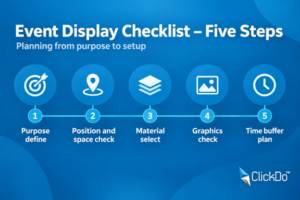
- Purpose: Give each display one primary job, whether that is recognition, wayfinding or explaining an offer.
- Position: Confirm the viewing distance, available space and any venue rules on dimensions or mounting.
- Material: Choose solid vinyl or breathable mesh according to the location, exposure and suitable fixing method.
- Artwork: Read the headline at a distance and check the final-size file, bleed, colour settings and image quality.
- Timing: Allow for file approval, production, dispatch, delivery and setup before the event opens.
These checks turn signage from a last-minute purchase into a planned part of the campaign. When the message, material and location have been considered together, each display has a clearer purpose: helping visitors recognise the business, navigate the space and decide whether to start a conversation.
Author Profile
- Guest Blogger & Outreach Expert - Interested in Writing Blogs, Articles in Business Niche | News Journalist By Profession in the United Kingdom
Latest entries
 BusinessOctober 20, 2026Maximising High-Impact Signage for UK Events in 2026
 BusinessOctober 17, 2026Why Investors Ignore Your Deck: What They Mark Down Before the First Meeting
 TechnologyOctober 16, 2026Create Realistic Driving Videos from Dashcam Footage
 BusinessSeptember 15, 2026Why Small Business Insurance Is No Longer Optional in 2026?