
How UK Small Manufacturers Use In-House 3D Printing to Cut Prototyping Costs

Table of Contents
UK small manufacturers use in-house 3D printing to cut prototyping costs by removing the bureau’s per-part charge, the courier and the wait.
Once a printer is on site, a prototype costs its material, machine time and the operator’s hands-on time. In the illustrative example below, a housing quoted at £80 delivered costs about £21 to print in-house, and the printer pays for itself in under a year at ten parts a month.
This article covers where outsourced costs come from, what an in-house part costs, how payback works, which parts to bring in-house first and what to check in a printer.
Where do outsourced prototyping costs come from?
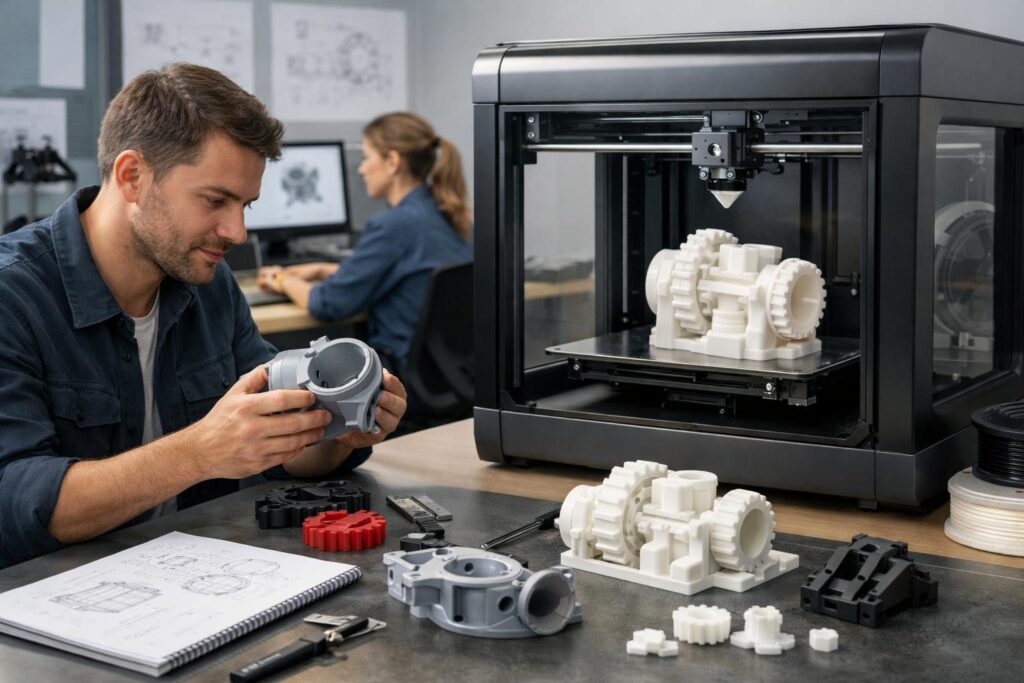
An outsourced prototype carries more cost than the price on the quote. Bureaus typically price each job on material, machine time, finishing and setup, then add delivery. Your team adds hours too: preparing files, requesting quotes, chasing orders and checking parts on arrival.
The larger hidden cost is time. Each design iteration waits for a quote, a slot in the bureau’s queue and a courier, so one design loop usually takes days. Speed is also the reason many engineers give for choosing 3D printing: in the Protolabs 3D Printing Trend Report 2024, almost half (47%) of respondents said lead time was the main reason they opted for 3D printing over other manufacturing methods.
Before you compare options, pull the last 12 months of prototyping invoices. Note the total spend, the number of orders and the typical gap between sending a file and receiving the part. Those three figures are the baseline any in-house printer has to beat.
What does an in-house prototype really cost?
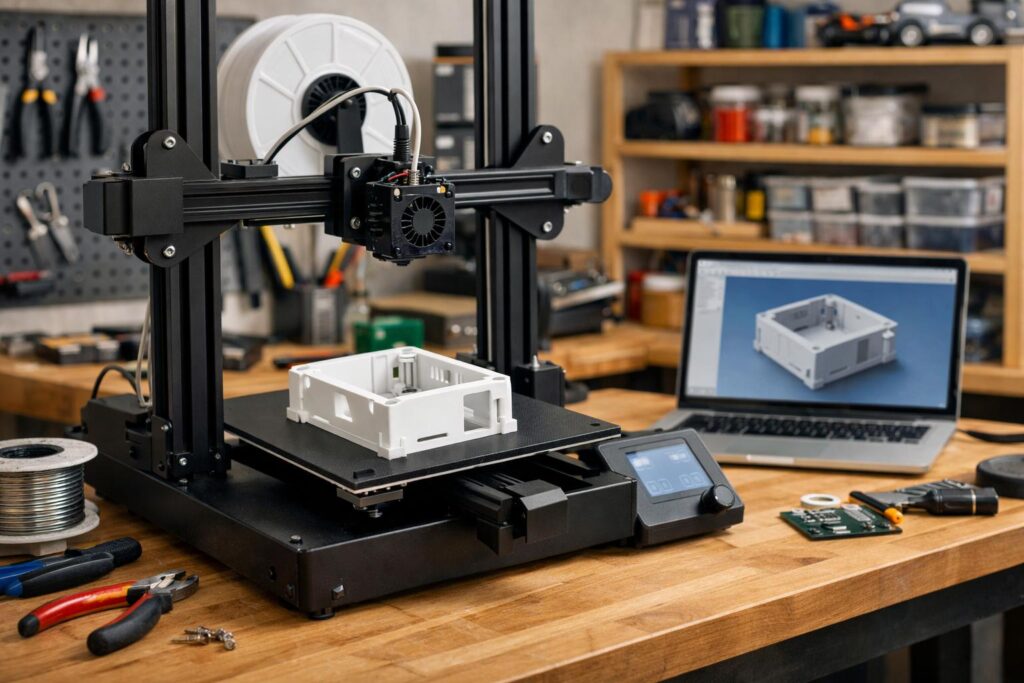
An in-house part costs its share of the printer, plus material, energy, labour and an allowance for failed prints:
Cost per part = (printer cost ÷ parts over its working life) + material + energy + labour + failure allowance
Illustrative example, with hypothetical figures:
A 200 g ABS housing uses £5 of filament at £25 per kilogram.
Spreading the printer’s cost over its working life adds £3, energy for a ten-hour print adds around £1, and 20 minutes of hands-on time at £30 an hour adds £10.
With a 10% failure allowance, the part costs about £21, against a hypothetical bureau quote of £70 plus £10 delivery.
How long does the printer take to pay back?
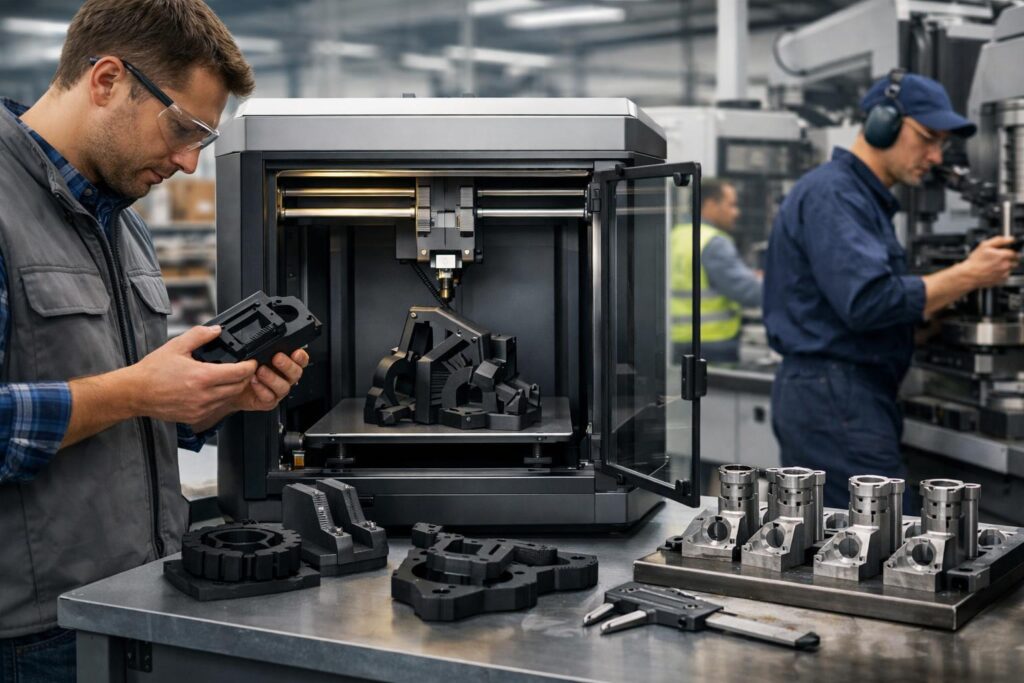
For payback, leave out the £3 printer share, because the printer’s price is what you are paying back. The running cost in the example is then about £18 (£16 plus the 10% allowance), so each housing saves about £62 against the £80 bureau price. If the printer and its accessories cost £6,000, it pays back after about 96 parts, or just under ten months at ten parts a month. At two parts a month, the same printer takes about four years.
How does tax relief affect the sums?
The Annual Investment Allowance lets most UK businesses deduct the full cost of qualifying plant and machinery, up to £1 million a year, from profits before tax. Reliefs like this shape real decisions: the Make UK and RSM UK Investment Monitor 2025 found almost four in ten firms basing their investment decisions on the availability of tax incentives. Ask your accountant whether a printer qualifies in your case.
Which parts should you print in-house first?
Start with the parts you order most often, because they repay the printer fastest. Four groups usually come first:
- Form and fit prototypes, where you check size, ergonomics and assembly often.
- Jigs and fixtures for your own line, such as drill guides, assembly nests and inspection gauges.
- Small batch runs of end-use parts, covering early orders while an injection mould is being made or before demand justifies one.
- Replacement parts for your own equipment where no supplier stocks the original.
Keep metal parts, high-temperature components and tight-tolerance features with a bureau until you have tested what your printer and materials can hold.
What should you check before buying a printer?
Size the printer from your recurring parts. Check build volume against the largest part you make every month, and check print materials against the heat and load those parts see in service. Larger parts in ABS, ASA and nylon need an enclosed, ideally heated, chamber to stay flat, and carbon or glass fibre filaments need a wear-resistant nozzle.
When you compare industrial 3D printers for small manufacturers, also check for dual extrusion, which prints soluble supports for internal channels, and power-loss recovery for long jobs. Ask about UK availability of spare parts and service, because a printer waiting on a part from overseas brings back the delays you bought it to remove.
Frequently asked questions
Two questions come up often before buying.
1. Do you need a specialist to run an in-house 3D printer?
No. A competent engineer or technician can learn slicing and routine maintenance, but budget for training. Skills are already high on manufacturers’ lists: the same Investment Monitor found skills development had overtaken plant and machinery as manufacturers’ top investment priority for the year ahead, at 47.6% versus 44.1%.
2. Are 3D printed parts strong enough for production use?
Often, for jigs, fixtures and low-load parts in engineering materials. Test each part under its real load first, because FFF parts are weakest across their layers.
3. Is in-house 3D printing worth it for a small UK manufacturer?
It is worth it when you prototype often. Add up last year’s prototyping invoices, work out a realistic running cost per part with your own labour rate, and divide the printer’s price by the saving per part. If your recurring parts fit one printer and you iterate weekly, the payback is likely to be short. If you order a few parts a year, or need metal or very large parts, a bureau remains the cheaper route.
About the author: Cody Bishop writes about professional 3D printing.
Author Profile

- Passionate content creator, contributor, freelance writer and content marketing allrounder.
Latest entries
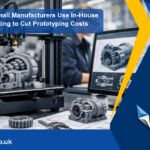 Business TipsNovember 21, 2026How UK Small Manufacturers Use In-House 3D Printing to Cut Prototyping Costs
 Business TipsNovember 17, 2026Why “Processing” Is a Poor Answer to a Paying Customer
 Business TipsSeptember 23, 2026How to Write a Product Requirements Document (PRD)
 Business TipsJune 25, 2026Protect Your Business: 5 Steps to Keep Your Sensitive Data Safe in 2026