
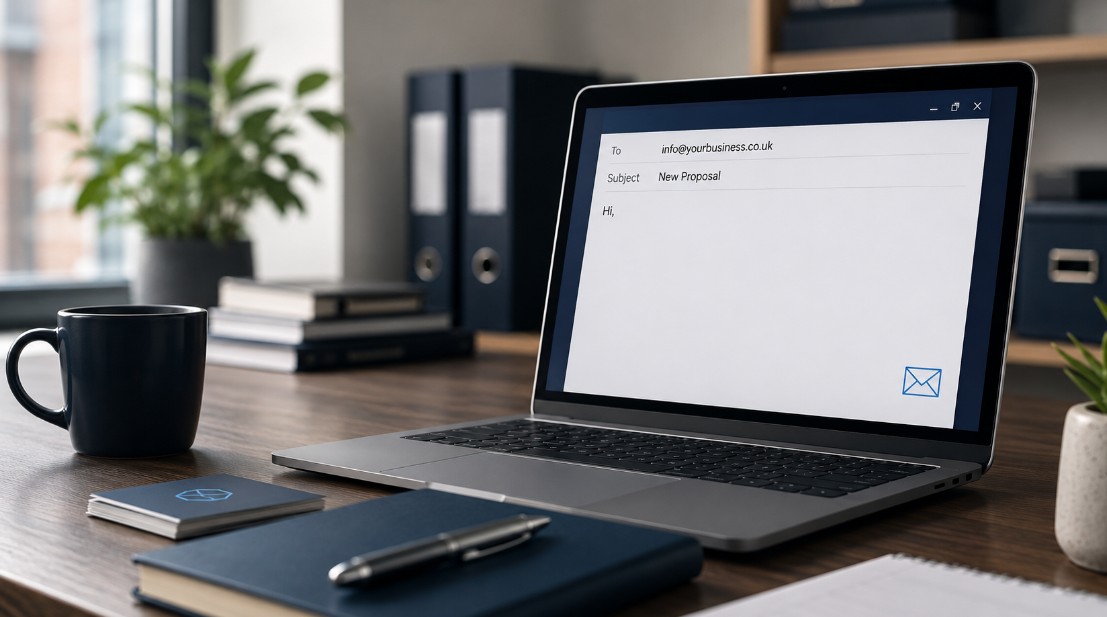
How To Choose the Right Email for Business?

By Ryan Bradman
When business owners think about brand protection, they tend to picture logos, trademarks and maybe a strongly worded cease and desist letter if someone copies their work.
Few people think about their inbox. Yet the email address you use every day, the one on your invoices, your website and your business cards, says a surprising amount about how seriously your business is taken.
A free webmail address can undermine everything else you have built. Clients notice these small details even if they never mention them.
The good news is that fixing this is one of the simplest brand improvements a business can make, and it pairs neatly with the wider question of how you protect your brand online.
Instilling Trust in the Inbox
Before a client ever visits your website or reads your terms and conditions, they often see your email address first, whether that’s in a quote, an introduction, or a reply to an enquiry.

An address that matches your domain name signals consistency. It tells the recipient that the company sending the message is the same one they looked up online, which sounds obvious but matters more than most owners realise.
Compare that to an email from a generic provider with a name that doesn’t match the business at all. It raises a small flag, even if it’s subconscious. Is this really the company? Is this email even legitimate? In a world where phishing scams impersonate businesses constantly, that hesitation can cost you a reply, or worse, a client.
Choosing the Right Email for Your Business
Setting up a custom domain email is straightforward these days, and it no longer requires an in-house IT team.
Privacy-conscious email providers let you connect your own domain, set up addresses for each team member, and benefit from end-to-end encryption as standard. That last point matters more than it might seem.
A business email account holds contracts, financial details and client correspondence – exactly the kind of information that brand-impersonation scammers go looking for.
Switching providers can feel like a hassle, but most services let you forward your old address for a transition period, so nothing gets lost while clients adjust to the new one.
Data Protection Isn’t Just an IT Problem
Brand protection and data protection overlap more than people expect. If your business handles any personal information, and almost all businesses do, the Information Commissioner’s Office sets out clear expectations for how that information should be stored and transmitted.
A poorly secured email account is one of the most common ways small businesses fall foul of these expectations, often without realising it until something goes wrong.

Treating your inbox as part of your data protection setup, rather than just a communication tool, is a small mindset shift that pays off. It means thinking about who has access, how passwords are managed, and what happens to old messages once a project ends.
Consistency Across Every Touchpoint
Brand protection works best when it’s consistent. A polished website paired with a scrappy email address creates a mismatch that undermines the effort put into the rest of your branding.
The same goes for invoices, proposal documents and even out-of-office replies. If you’re investing in branding services to get your visual identity right, it’s worth applying the same care to the digital details that clients interact with daily.
None of this requires a major overhaul. Setting up a professional, secure email address is an afternoon’s work at most, yet it touches almost every client interaction going forward. It’s one of the cheapest ways to make sure that credibility carries through to the inbox too.
Author Profile
- Guest Blogger & Outreach Expert - Interested in Writing Blogs, Articles in Business Niche | News Journalist By Profession in the United Kingdom
Latest entries
 BusinessOctober 20, 2026Maximising High-Impact Signage for UK Events in 2026
 BusinessOctober 17, 2026Why Investors Ignore Your Deck: What They Mark Down Before the First Meeting
 TechnologyOctober 16, 2026Create Realistic Driving Videos from Dashcam Footage
 BusinessSeptember 15, 2026Why Small Business Insurance Is No Longer Optional in 2026?